
Steal a Brainrot - Your Ultimate Hub for Free Online Games, Guides & Community
Dive deeper into the world of absurd indie games. If you enjoy Steal a Brainrot, you'll love these picks. We've curated the ultimate list of similar chaotic, meme-filled, and hilarious experiences.
Categories











All Games

































































































Steal a Brainrot - Your Ultimate Hub for Free Online Games, Guides & Community
Steal a Brainrot: A Deep Dive into the Internet’s Collective Consciousness
We’ve all been there. You’re standing in the shower, and instead of planning your day, a single, looping phrase is chanting in your mind: “Skibidi, skibidi, skibidi.”You’re trying to fall asleep, but your internal monologue has been replaced by a sped-up, auto-tuned audio clip of a man yelling about Ohio. You see a perfectly normal object—a gyatt, a large container of oatmeal, a fanum tax—and a secret, knowing smirk threatens to break across your face. You are not alone. You are not going insane. You are, quite simply, suffering from a severe case of Brainrot.
The term has exploded from the deepest, most chaotic trenches of internet culture—primarily TikTok, YouTube Shorts, and platforms like Discord and Twitter (X)—to become a self-diagnosis for a generation. But what isit? Is it a meme? A mental illness? A cultural shift? The answer is a resounding yes to all of the above, in a way that defines our current digital epoch. To "steal a brainrot" is to willingly immerse yourself in its logic, to let it reconfigure your neural pathways. This is an exploration of that peculiar theft.
Defining the Undefinable: What Exactly IsBrainrot?
At its core, Brainrot is a state of mind characterized by the pervasive and often involuntary intrusion of hyper-specific, absurdist, and self-referential internet memes into one’s thoughts and patterns of speech. It’s the digital equivalent of getting a song stuck in your head, but instead of a pop chorus, it’s a surreal, context-dependent slice of online lore.
The term itself is brilliantly descriptive. It suggests a decay, a rotting away of the "normal" brain to make way for a new, internet-native consciousness. It’s not merely about remembering a meme; it’s about your brain beginning to process reality throughthe lens of the meme.
Key Characteristics of Brainrot:
-
Hyper-Absurdity: The content that causes Brainrot is rarely straightforward or logical. It thrives on non-sequiturs, bizarre characters (like Skibidi Toilet’s cameramen and toilet-headed antagonists), and phrases that are deliberately silly or meaningless outside their specific context ("Gyatt" for "God damn," "Rizz" for charisma).
-
High Velocity and Layering: Brainrot content evolves at a breakneck pace. A meme isn’t just a static image; it’s a video clip that gets remixed, sped up, slowed down, layered with other audio, and given new captions daily. Understanding a current Brainrot meme often requires knowledge of five previous, interconnected memes.
-
Community as a Prerequisite: The "rot" spreads through in-groups. Using these phrases or understanding these references in the physical world acts as a secret handshake. If someone responds to your muttered "Skibidi" with a "Sigma" or a reference to "Ohio," you’ve found a fellow infected individual. This creates a powerful sense of belonging.
-
The Erosion of the "Main Character" Mentality: Brainrot culture is largely anti-heroic. Its archetypes are the "Sigma" (a lone wolf, often portrayed with grim determination in mundane situations), the "Fanum Tax" (the idea that a friend can claim a portion of your food), and characters who are flawed, weird, or simply toilets. It’s a rejection of polished, influencer-perfected online life in favor of collective, chaotic silliness.
The Petri Dish: How Platforms Cultivate the Rot
Brainrot didn’t emerge from a vacuum. It is the direct product of the algorithmic architectures that dominate our digital lives. Platforms like TikTok and YouTube Shorts are the perfect petri dishes for cultivating this specific strain of cultural virus.
The Algorithm as a Curator of Chaos: These platforms are designed for maximum engagement, not for coherence. The "For You" page or Shorts feed is a continuous, unpredictable stream of content. You can go from a cooking tutorial to a political debate to a video of a cat wearing a hat to a 15-second clip of a man screaming about "Ohio against the world" in the span of 30 seconds. This constant context-switching breaks down the brain’s natural resistance to absurdity. We are being trained, click by click, to accept and even crave incoherence.
Short-Form Content and the Death of Attention: The very format of short videos (often 15-45 seconds) encourages a style of comedy and storytelling that is all punchline and no setup. Nuance is impossible. Impact is everything. This leads to content that is intensely repetitive, loud, and visually stimulating—perfect for burrowing into your short-term memory and playing on a loop.
Remix Culture on Steroids: Digital tools make it effortless to take a piece of media and alter it. This has accelerated meme evolution to light speed. A single audio clip from a streamer like Kai Cenat (e.g., "Fanum Tax") can be applied to thousands of different scenarios, each application adding a new layer of meaning (or meaninglessness) to the original. This creates a dense, interconnected web of references that constitutes the "lore" of the Brainrot.
A Case Study in Rot: The Skibidi Toilet Phenomenon
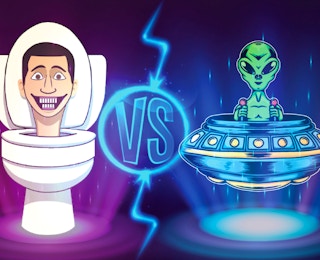
No single phenomenon better exemplifies Brainrot than Skibidi Toilet. For the uninitiated, describing it feels like explaining a fever dream. Created by YouTuber DaFuqBoom!, it’s a series of episodes (told in the Source Filmmaker animation style) where a war rages between men with heads of various objects (cameras, speakers, televisions) and an army of sentient, singing toilets that emerge from bathroom stalls.
To an outsider, it is incomprehensible nonsense. To those with the rot, it is a gripping, serialized drama with complex factions, evolving strategies, and shocking plot twists. The genius of Skibidi Toilet is that it is pureBrainrot, unadulterated by any attempt to appeal to a mainstream, "normal" sensibility. It is a story built entirely from the aesthetic and logic of the internet’s absurdist underbelly. Its popularity proves that a significant portion of the online population doesn’t just tolerate this chaos; they actively crave it as a reprieve from the structured narratives of traditional media.
The Psychological Impact: Pathology or Progression?
Is Brainrot bad for us? The answer is complex. On one hand, the term itself is often used humorously, a way for people to bond over shared cultural touchstones. This communal aspect can be a powerful antidote to loneliness, creating a global inside joke.
However, there are legitimate concerns. The constant overstimulation, the reward-system hijacking of endless scrolling, and the erosion of sustained attention spans are real phenomena linked to heavy social media use. Brainrot could be seen as a symptom of this broader digital anxiety. When our daily intake of information is a firehose of decontextualized, high-impact stimuli, it’s no wonder our subconscious minds begin to regurgitate it.
Yet, to dismiss it as mere degradation is to miss its cultural significance. Brainrot is a form of postmodern creativity. It is a collective writing of a new, decentralized mythology. There are no authors, only contributors. There is no canon, only a swirling cloud of interpretations and remixes. It is a language being built in real-time, and to be fluent in it is to be a citizen of this particular moment in digital history.
How to Steal a Brainrot (And When to Seek a Cure)
So, you want to "steal" the Brainrot? You want to immerse yourself in this brave new world? The process is simple, though the outcome is unpredictable.
-
Immerse Yourself: Spend time on TikTok, YouTube Shorts, or specific subreddits like r/ihaveihaveihavereddit. Don’t fight the algorithm. Let it take you where it will.
-
Embrace the Confusion: You will not understand anything at first. That’s the point. The learning curve is part of the experience. Lean into the absurdity.
-
Learn the Lore: When you encounter a new term or character, look it up. Websites like Know Your Meme are essential field guides for the terminally online.
-
Participate: Use the language. Make a reference. Create a edit. The rot spreads through participation.
But like any powerful substance, moderation is key. It is crucial to know when to log off. If you find the involuntary thoughts are causing anxiety, if you’re struggling to focus on tasks that require deep thought, or if your real-world relationships are suffering because you can’t communicate outside of meme references, it might be time for a digital detox. The goal is to "steal" the creativity and community of the Brainrot without letting it consume your entire cognitive landscape.
Conclusion: The Rot is the Message
Brainrot is more than just a silly trend. It is a testament to the human brain’s incredible adaptability and its desire to find pattern and meaning, even in chaos. It is a cultural rebellion against sanitized, corporate-approved online content. It is messy, confusing, and often infuriating, but it is undeniably alive.
In the end, to "steal a Brainrot" is to accept that the internet is no longer just a tool we use; it is an environment we inhabit, and it is changing us. The memes, the sounds, the inside jokes—they are the new folklore, the mythology of the digital native. The rot is not a sign of decay, but a symptom of a new, collective consciousness taking root. So, the next time you hear a "Skibidi" in the wild, don’t dismiss it. Recognize it for what it is: the sound of a new world being built, one absurd, glorious, and utterly rotted brick at a time.